
5 Indicators of How to Tell If Art Is AI Generated
As generative models become more deeply embedded in marketing and design, it also comes naturally with results that make us wonder how to tell if art is AI-generated or not, like the case of ChatGPT’s Studio-Ghibli-inspired content.
This has raised ethical and security issues. And to that end, understanding how to check if digital art is AI-made or not becomes an urgent matter now more than ever.
Key takeaways:
- Modern AI art detection requires a combination of human observation for anatomical errors and specialized software/tools.
- Effective authentication relies on pixel analysis and digital forensics to identify hidden algorithmic fingerprints in synthetic media.
Common Signs of AI-Generated Artwork
Despite advancements, AI often struggles with the logic of the physical world and human biology. Spotting the algorithm artifacts in physical aspects, as detailed below, is your way of knowing how to tell if art is AI-generated.
1. Complex Anatomical Errors

Beyond simple digit counts, look for jumbled clusters of digits, extra limbs, or hands that feature odd proportions and a complete lack of fingernails. AI often struggles with “joint logic,” resulting in fingers that bend at impossible angles or limbs that seem to sprout directly from the torso without proper muscular structure.
2. Dental and Facial Irregularities
Examine the mouth and eyes closely. Teeth may appear melted together, overlap in asymmetrical ways, or exist in impossible quantities that defy dental reality. Eyes often lack pupillary symmetry, featuring mismatched reflections or pupils that are not perfectly circular.
Also Read: What is the Main Goal of Generative AI: Reflection of the Augmentation Era
3. Functional Implausibilities
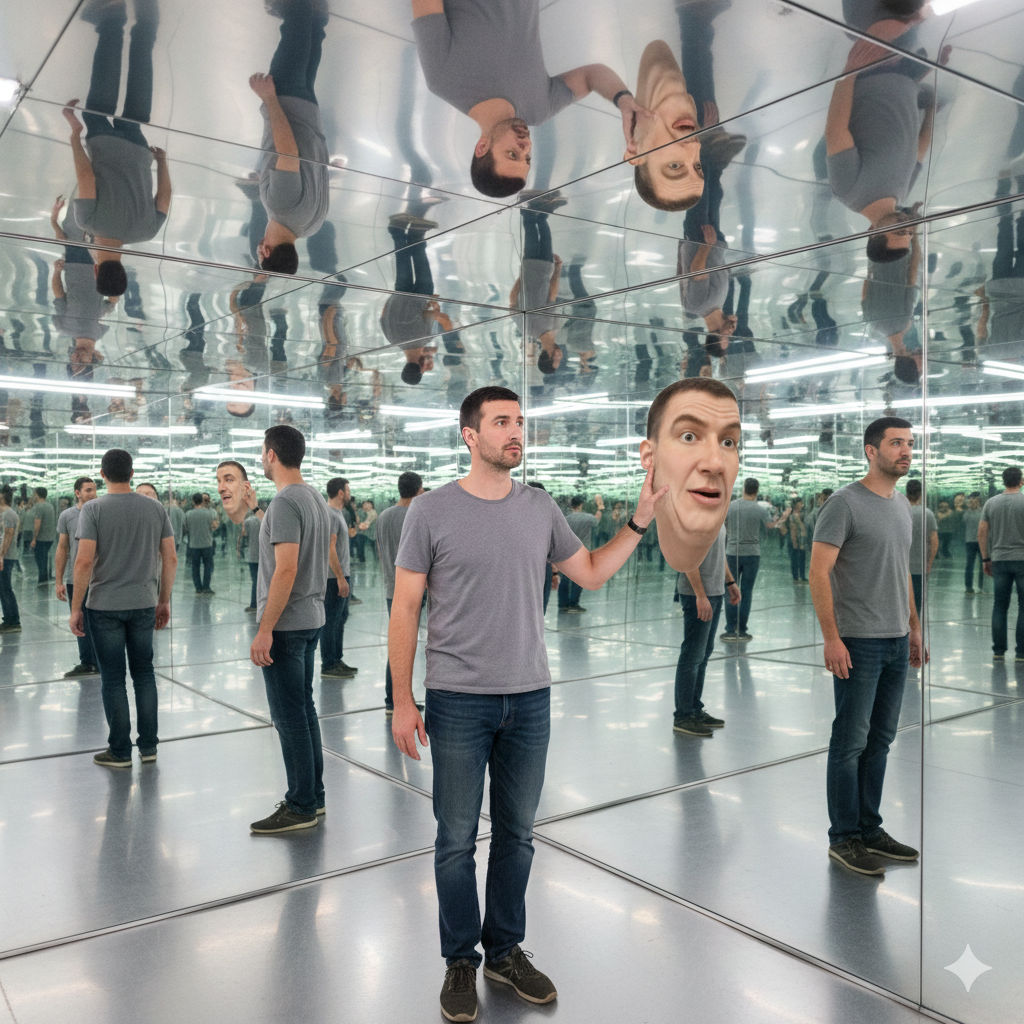
Observe how objects interact with the environment. Look for items that lack physical logic, such as backpack straps merging into shirts, jewelry hovering just above the skin, or glasses that blend into the wearer’s temples rather than resting on them. They are common physical signs that prove how AI does not understand the real-life nuance and layers, as KelloggInsights explained.
4. Inconsistent Lighting and Shadows
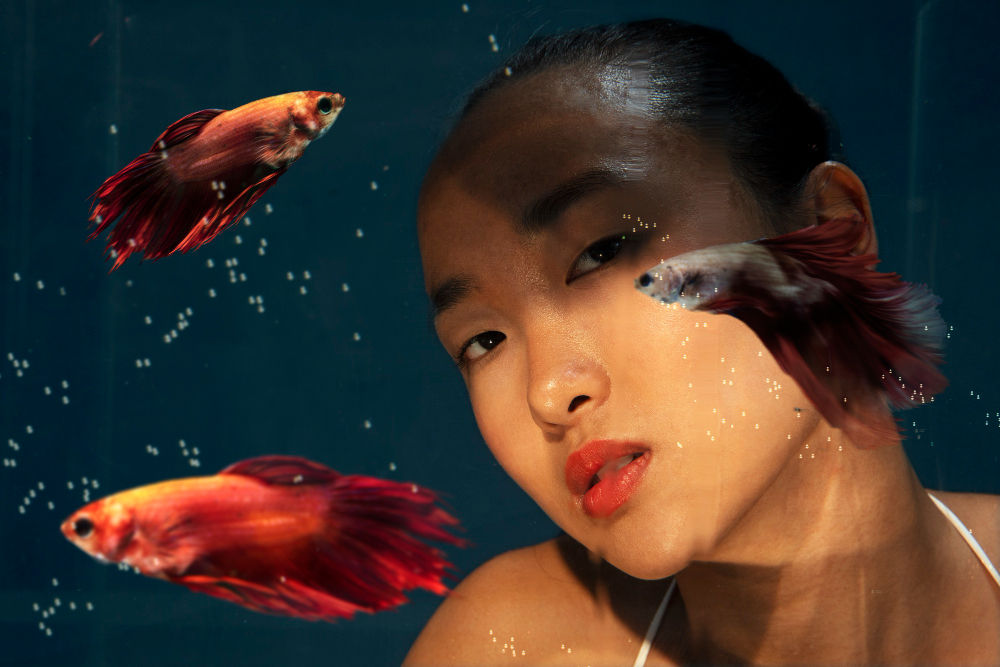
Identify shadows falling at conflicting angles, suggesting multiple contradictory light sources. AI often fails to render “occlusion shadows,” the dark areas where two objects touch. This results in elements that look like they are floating or “copy-pasted” onto the scene.
5. Synthetic and Waxy Textures
AI-generated skin frequently appears waxy, airbrushed, or suspiciously smooth. Unlike human-created digital art, which often includes intentional imperfections, AI surfaces tend to lack natural pores and varied skin textures, often resulting in a “plastic” aesthetic across the entire subject.
Also Read: 8 Best and Affordable AI Avatar Generators for Small Businesses
How to Tell if Art Is AI-Generated Through Source Identification
How to know if an image was generated by AI when visual inspection is inconclusive? In this case, collectors should turn to digital forensics to check if digital art is AI-made by verifying its origin and trail of creation through the following approaches.
1. Metadata Mining
This involves uncovering the “digital paper trail.” By right-clicking a file to view its “Properties” or “Get Info,” you may find software markers, creation dates, or artist fields that suggest an AI platform.
2. Invisible Watermarking Detection
Many advanced AI tools now utilize “invisible watermarks” (such as Google’s SynthID). While not visible to the naked eye, these require specialized extraction software to verify the source platform.
3. Reverse Image Searches
Using Google Images or TinEye helps track the source by finding where the image first appeared. If a high-profile piece has no history or leads back only to AI communities, it is a strong indicator of synthetic origin.
4. File Specification Analysis
AI tools often output compressed, low-resolution JPEGs (720p), whereas professional artists typically provide high-resolution RAW, TIFF, or PSD files. So, identifying the file format can be a giveaway.
Also Read: Best AI Image Generator for Line Art You Need to Try
Analysis Software to Tell if Artwork Is AI-Generated
Although identifying the physical signs and source are beneficial steps, the current AI-generated content got more refined. Hence, you may find that utilizing the specialized tools and software below to analyze images for common signs of AI generation is more helpful.
1. Pixel-Level Forensic Analysis
These tools bypass metadata and visual interpretation to scan the underlying mathematical structure of an image. They look for “invisible” noise patterns and artifacts left by the generative process.
Tools: Sightengine (analyzes the pixel structure of an image), AI or Not (analyzes an image “pixel by pixel”), and Hugging Face (assembling a machine learning art tool).
2. Multi-Model Content Moderation and Classification
These tools are often broader “infrastructure” solutions that use their own trained AI models to classify content, flagging synthetic images alongside other types of manipulated media.
Tools: Hive Moderation (automated image classification), Sensity AI (originally specialized in deepfakes), Deepware Scanner (identifying synthetic content), and WasItAI (identifying and flagging the specific visual signatures of major AI generators).
3. Real-Time Extension Tools
These tools offer immediate, “on-the-fly” analysis for users browsing the web.
Tool example: Illuminarty (a Chrome browser extension designed to scan images online and in real-time).
Also Read: How to Make Studio Ghibli AI Art: A Guide to Magical Results
Honoring the Human Spark
Generative AI makes it significantly easier to generate visual content, yet it remains a tool of replication rather than innovation. It often falls short of capturing the profound emotional depth, cultural nuance, and intentionality that define a genuine creative spark.
This know-how to tell if art is AI-generated is just a small approach to ensure and secure content authenticity. The other way is by reserving aesthetic touch built on a foundation of unique experiences and subjective interpretation that machines cannot fully replicate. For example, by utilizing professionally crafted typefaces.
Find special collections fromStringLabs Creative to help your published content stand out with a distinct, human-led aesthetic.
Comments are closed.